
Institute for Surgical Excellence Board Leaders Help Shape the Future of Robotic, Digital, and AI-Enabled Surgery at SRS 2026
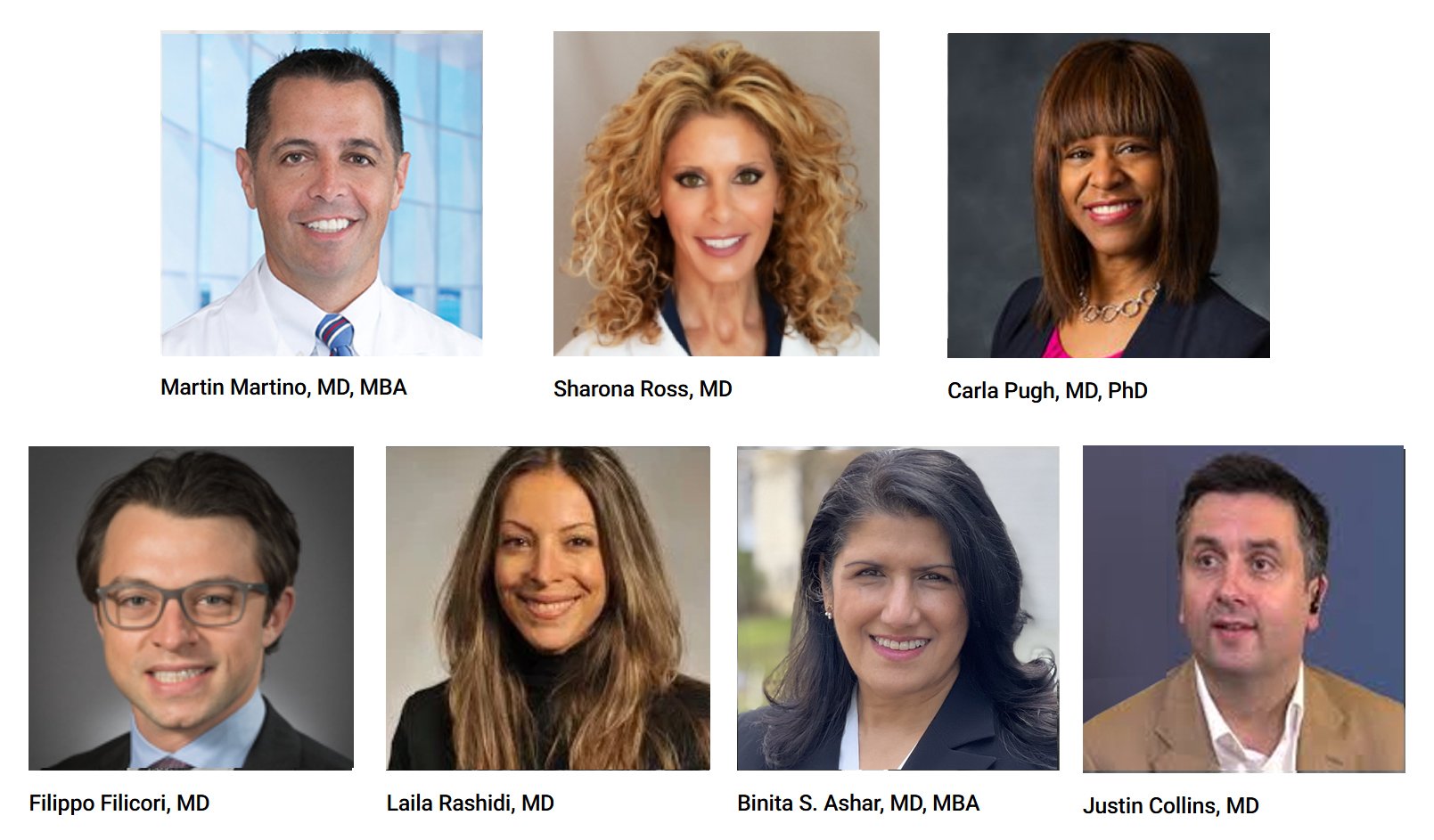
HOLLYWOOD, Fla., July 26, 2026 — The Institute for Surgical Excellence (ISE) recognizes the extraordinary contributions of seven members of its Board of Directors at the 2026 Annual Meeting of the Society of Robotic Surgery (SRS), held July 23–26 in Hollywood, Florida. Martin Martino, MD, MBA; Sharona Ross, MD; Laila Rashidi, MD; Justin Collins, MD; Filippo Filicori, MD; Carla Pugh, MD, PhD; and Binita Ashar, MD, MBA, participated across dozens of scientific sessions, specialty programs, panel discussions, lectures, debates, and roundtables. Their work addressed many of the most important issues facing robotic and digital surgery, including surgeon education, artificial intelligence, data analytics, regulatory pathways, platform evaluation, telesurgery, clinical implementation, credentialing, cybersecurity, and patient safety.
“The breadth of our board members’ contributions at SRS 2026 demonstrates the remarkable clinical, scientific, educational, and regulatory expertise represented within the Institute for Surgical Excellence,” said Jeffrey Levy, MD, Co-Founder and Executive Director of ISE. “They did much more than deliver lectures. They helped design the scientific program, lead specialty tracks, facilitate difficult conversations, evaluate emerging technologies, and bring together surgeons, regulators, educators, health-system leaders, engineers, and industry. This is precisely the multidisciplinary leadership required to move robotic surgery and artificial intelligence forward safely and responsibly.”
Scientific and Program Leadership
Martin Martino, MD, MBA, and Sharona Ross, MD, FACS, served as two of the three Scientific Program Directors for the 2026 meeting, helping shape an extensive international program spanning robotic platforms, clinical applications, artificial intelligence, telesurgery, digital surgery, training, and emerging technologies.
Dr. Martino provided leadership across gynecologic, plenary, administrative, AI, and future-of-surgery programming. He welcomed participants to the gynecology program and contributed to sessions addressing global training and certification pathways, telesurgery and teleproctoring, artificial intelligence and predictability in complex gynecologic procedures, management of intraoperative complications, and the evaluation of multiport robotic systems. He also participated in discussions on operationalizing intelligent surgical platforms, implementing AI and humanoid technologies within health systems, and defining what surgeons will need as robotics enters its next stage of development. His academic contribution included work examining access and timing from postmenopausal bleeding to robotic surgery across Florida health systems.
Dr. Ross served as a moderator for the plenary session evaluating emerging multiport robotic systems and contributed to major discussions on implementing AI and humanoid technologies in clinical environments, the next frontier in surgical robotics, and the future of telesurgery. She also delivered a practical surgical education presentation, “Robotic CBD Exploration: A Step-by-Step Approach,” providing participants with an expert framework for applying robotic technology to complex biliary surgery.
Advancing Robotic Colorectal Surgery
Laila Rashidi, MD, served as Co-Chair of the SRS colorectal program and helped organize and lead a comprehensive curriculum covering colorectal malignancy, benign disease, complications, clinical efficiency, and emerging robotic platforms. She chaired the opening colorectal program, moderated a major colorectal abstract session, and facilitated interactive discussions and video-based learning.
Dr. Rashidi’s presentations and faculty contributions included her experience with the da Vinci 5 platform; same-day and short-stay robotic colectomy for cancer; one-day discharge following robotic left colectomy; robotic management of perforated diverticulitis and colon cancer; complex diverticulitis with colovesical fistula; and the management of intraoperative pelvic bleeding. Her participation connected technical instruction with practical questions involving patient selection, complication management, perioperative pathways, and responsible adoption of new robotic systems.
Defining the Future of Surgical AI
Filippo Filicori served as Co-Chair of the SRS Surgical AI program and participated in one of the meeting’s most extensive collections of sessions focused on artificial intelligence, automation, and digital surgery.
His contributions addressed AI, automation, and the learning surgeon; the use of kinematics and computer vision to understand surgical movement and intent; comparisons between visual data and instrument kinematics; the current state of AI development in robotically assisted and digital surgery; and the future of digital surgery. He also participated in sessions examining virtual reality versus three-dimensional printing, the role of AI in surgery, emerging regulatory frameworks, and the obstacles that arise when innovators attempt to translate technologies for which no clear regulatory precedent exists.
His leadership helped connect technical AI development with surgeon learning, clinical utility, regulatory science, and the need for evidence-based implementation.
Connecting Surgical Data, Performance, and Education
Carla Pugh, MD, PhD, contributed her internationally recognized expertise in surgical performance measurement, wearable technology, data analytics, and surgical education.
Dr. Pugh participated in the plenary panel “Data Collection and Analytics and Cybersecurity,” joining leaders from health systems, surgical technology companies, and digital surgery organizations to consider how surgical data should be collected, protected, interpreted, and translated into better care. She also presented “Differentiation of Platform vs. Technical Learning Needs in Robotic Surgery Using Wearable Technology,” demonstrating how objective measurement can help distinguish the skills needed to operate a specific platform from the technical capabilities required to perform surgery effectively.
Her work reinforced the importance of using high-quality data not simply to measure surgeons, but to improve training, personalize education, evaluate new technologies, and strengthen patient safety. Dr. Pugh also was awarded with the best abstract for the 2026 SRS meeting.
Bringing the Surgeon’s Perspective to Digital Innovation
Justin Collins, MD, participated in the roundtable “Surgeons Partnering with Industry to Deliver the Promise of Digital Surgery.”
The session brought surgical and industry leaders together to examine how clinicians and technology developers can collaborate more effectively throughout product design, validation, implementation, and continuous improvement. Dr. Collins helped bring the practicing surgeon’s perspective to questions involving clinical workflow, data requirements, meaningful outcomes, adoption barriers, and the translation of technological innovation into tangible benefits for surgical teams and patients.
His participation reflected ISE’s commitment to collaborative development models in which surgeons, engineers, industry, researchers, regulators, and patients share responsibility for determining how new technologies should be introduced into clinical practice.
Leading the Regulatory Conversation
Binita Ashar, MD, MBA, FACS, MAMSE, served as Co-Chair of the SRS Regulatory/FDA program, helping organize and moderate discussions addressing some of the most consequential regulatory questions in robotic and digital surgery.
Dr. Ashar delivered opening remarks, moderated the program’s collaborative community and closing discussions, participated in a roundtable of former FDA office directors, and contributed to a session examining the bottlenecks that arise when innovative technologies move toward clinical translation without an established regulatory precedent. She also presented “Regulatory Issues in RASD and Digital Surgery in 2026,” addressing the evolving oversight environment for robotically assisted surgical devices and digitally enabled surgical technologies.
In a separate Digital OR session, Dr. Ashar presented “Experience in Data Sharing Through My Work as a Surgeon and FDA—How This Builds Better Devices.” Her presentation highlighted the importance of responsible data sharing, post-market learning, collaboration among stakeholders, and the use of real-world clinical experience to support safer and more effective medical-device development.
A Shared Commitment to Responsible Innovation
Collectively, the work of these seven ISE board members illustrates the full ecosystem required for surgical innovation: clinical excellence, objective evaluation, education and credentialing, thoughtful technology development, effective human–industry collaboration, regulatory clarity, institutional readiness, and continuous attention to patient safety.
“The future of surgery will not be determined by technology alone,” Dr. Levy said. “It will be determined by how well we prepare people and institutions to evaluate, govern, implement, and continuously improve that technology. We are extremely proud of the leadership our board members demonstrated at SRS 2026 and grateful for their continued commitment to advancing surgical excellence.”
The ideas advanced at SRS 2026 will also help inform ISE’s ongoing work in AI-enhanced surgical practice, responsible AI governance, human–AI collaboration, surgical data, implementation science, education, credentialing, and the development of consensus-based standards for emerging surgical technologies.
About the Institute for Surgical Excellence
The Institute for Surgical Excellence is a 501(c)(3) public nonprofit organization formed in 2014. ISE brings together surgeons, researchers, educators, health-system leaders, regulators, engineers, industry representatives, and other stakeholders to develop consensus-driven solutions for complex healthcare challenges involving emerging surgical technologies. Its mission is to improve surgical care, patient outcomes, and safety through multidisciplinary collaboration, responsible innovation, education, research, and the development of new standards.
For more information, visit www.surgicalexcellence.org.
